Enzymes as biological catalysts, how they work, and the effects of temperature and pH.
🕐 7 min read
Enzymes are mostly proteins that act as biological catalysts, speeding up reactions without being used up. A substrate fits the enzyme's active site; the specific shape means each enzyme works on one type of reaction (specificity).
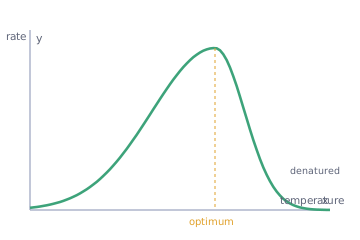
Rate rises with temperature up to an optimum, then falls sharply as the enzyme's active site denatures.
Rate rises with temperature up to an optimum, then falls as the enzyme denatures (its active site changes shape). Each enzyme also has an optimum pH; too far from it slows or stops the reaction.
Know three groups and what they break down: amylases (carbohydrates → sugars), proteases (proteins → amino acids) and lipases (fats → fatty acids and glycerol).
Saying enzymes are "killed" (they denature; they are not alive).
Thinking higher temperature always means a faster rate (past the optimum it falls).